![]() |
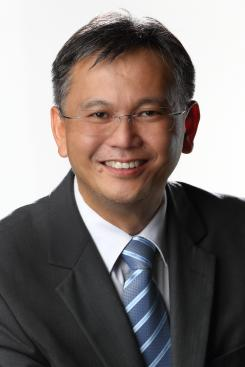
Simon James Fong, ProfessorUniversity of Macau, China |
| Simon James Fong graduated from La Trobe University, Australia, with a 1st Class Honours BEng in Computer Systems and a PhD in Computer Science in 1993 and 1998, respectively. Simon was a senior consultant at Hong Kong Telecom in 1998. He is now working as an Associate Professor at the University of Macau. He is also an Adjunct Professor at Durban University of Technology, South Africa, and a Senior Visiting Scholar at Tsinghua University, Beijing. Dr. Fong has published over 500 international conference and journal papers, mostly in the areas of machine learning and IoT technology. He serves actively as the IEEE ComSoc e-Health SIG Chair and an IEEE CIS member. | |
![]() |
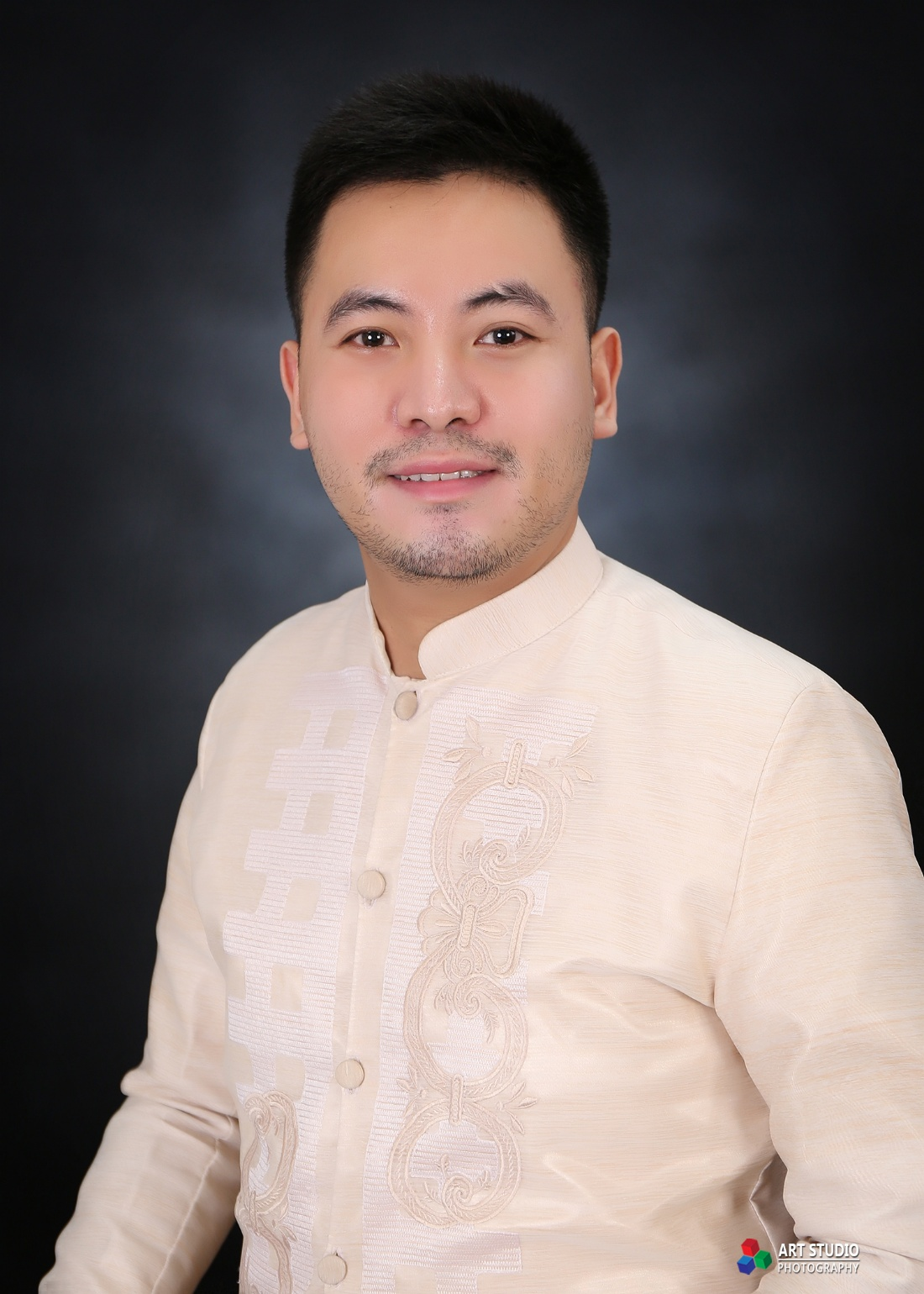
Abdullah Uz Tansel, ProfessorCity University of New York, USA |
Abdullah Uz Tansel received his BS in management, and his MS and PhD degrees in computer science from the Middle East Technical University, in Ankara Turkey. He has also received his MBA degree at the University of Southern California. After being a faculty member at the Middle East Technical University, Dr. Tansel joined Baruch College, the City University of New York (CUNY) where he is currently a professor of information systems and also a professor of computer science at The Graduate Center of CUNY. Professor Tansel’s research focus is on temporal databases and he has made significant contributions in this field. He also headed the editorial board that published the first book on temporal databases ‘Temporal Databases: Theory, Design, and Implementation’ (1993). Dr. Tansel has a patent on adding temporality to RDF. His research interests are Database Management Systems, Temporal Databases, Semantic Web, and Blockchain Databases WEB3.0, and Generative AI. Dr. Tansel has published many articles in the conferences and journals of the ACM, IEEE and other organizations. He is a frequent speaker on time in databases and blockchain as a database and Web3. He is also a member of the ACM and the IEEE Computer Society. Speech Title: Blockchain, Semantic Web and Decentralized AI (BCSWDAI) Exchange of trusted information/knowledge among people plays an essential role in every aspect of their lives: socially, economically, and politically. Also, networks in the past 70 years, by making digital information ubiquitous, transformed our lives in unimaginable ways. This trend with new innovative technologies such Blockchain, Web3, Semantic Web and AI surely will continue at an accelerating pace in the years ahead. The tutorial covers Blockchain, Sematic Web and Decentralized AI, which is a synergistic combination for innovative applications. Blockchain is a foundational innovation for keeping temper proof (trusted) data in a permanent, immutable, decentralized, global, and trustless ledger. It is a new field that combines distributed computing, databases, networks, cryptography, and economics, and is also rapidly evolving. It allows people, organizations, and machines to digitize their current relationships as well as forming new secure digital ones since data is securely recorded and shared in a blockchain database system. Moreover, new advances in WEB3.0 is taking place where individuals, organizations and machines are being empowered in a superior system of digital identity and trust in new services and products in many domains. Semantic Web enables the explicit representation of knowledge in ontologies by using Resource Description Framework (RDF) and deducing implicitly available knowledge by the machines, thus paving the way for the machines to process the knowledge and make decisions. It is an important component of RAGs. For big data and data analytics RDF is a very potent tool data integration tool. |
|
![]() |
Shunli Wang, ProfessorSichuan University, China |
Shunli Wang is a Professor, Doctoral Supervisor at Sichuan University, Academic Dean at Inner Mongolia University of Technology, Executive Vice President at Smart Energy Storage Institute, Deputy General Manager of Daqingshan Laboratory in Inner Mongolia Electric Power Group, Fellow of the Royal Society of Arts and Crafts (RSA Fellow), Fellow of the Institute of Engineering and Technology (IET Fellow), IEEE Senior Member, PCIM Asia Committee Member, IEEE PES Committee Member, Academic Leader of National Electrical Safety and Quality Testing Center, Tianfu Qingcheng Scientific and Technological Talent, High-level Overseas Talent, Tianfu A Talents, Academic & Technical Leader of Chinese Science and Technology City, Top 2% Worldwide Scientist, Global Highly Cited Researcher. Focusing on the major national strategic needs of new energy and energy storage systems, the research of green and low-carbon energy storage is conducted in smart grids, undertaken 56 projects such as the National Natural Science Foundation and National Key Research & Development, with a Research Interest Score value of 14995, and 258 articles published on SCI-indexed famous journals with 53 articles in the First Area / TOP journals in Chinese Academy of Sciences, 42 high-cited / hot ones, 23 international and domestic invention patents, 20 software Copyrights and standard formulation and 9 books have been published by first-class international and domestic publishing houses. 10 awards at or above the provincial or ministerial level have been achieved, including 3 international gold medals. 17 chairmanships of international conferences have been participated in, with 5 editorial boards of international periodicals. The core technical achievements have reached an international advanced level and have been reported by the People's Daily. Speech Title: Cloud computing and its application in state estimation of new power storage systems |
|
![]() |
Anand Nayyar, ProfessorDuy Tan University, Viet Nam |
| Dr. Anand Nayyar received Ph.D (Computer Science) from Desh Bhagat University in 2017 in the area of Wireless Sensor Networks, Swarm Intelligence and Network Simulation. He is currently working in School of Computer Science-Duy Tan University, Da Nang, Vietnam as Professor, Scientist, Vice-Chairman (Research) and Director- IoT and Intelligent Systems Lab. A Certified Professional with 280+ Professional certifications from CISCO, Microsoft, CompTIA, Amazon, Alibaba Cloud, Oracle, Google, Salesforce, Tableau, FinOps, Beingcert, EXIN, GAQM, Cyberoam and many more. Published more than 300+ Research Papers in various High-Quality ISI-SCI/SCIE/SSCI Impact Factor- Q1, Q2, Q3, Q4 Journals cum Scopus/ESCI indexed Journals, 80+ Papers in International Conferences indexed with Springer, IEEE and ACM Digital Library, 60+ Book Chapters in various SCOPUS/WEB OF SCIENCE Indexed Books with Springer, CRC Press, Wiley, IET, Elsevier with Citations: (Google Scholar):23000+, H-Index: 77 and I-Index: 311; (Scopus): 12700+; H-index: 60. Member of more than 60+ Associations as Senior and Life Member like: IEEE (Senior Member) and ACM (Senior Member). He has authored/co-authored cum Edited 70+ Books of Computer Science. Associated with more than 600+ International Conferences as Programme Committee/Chair/Advisory Board/Review Board member. He has completed 1 Grassroot and 1 ASEAN Project. He has 18 Australian Patents, 16 German Patents, 4 Japanese Patents, 44 Indian Design cum Utility Patents, 13 UK Patents, 1 USA Patent, 3 Indian Copyrights and 2 Canadian Copyrights to his credit in the area of Wireless Communications, Artificial Intelligence, Cloud Computing, IoT, Healthcare, Drones, Robotics and Image Processing. He has guided more than 200+ Undergraduate Students (B.S. Degree), 30 MCA, 7 M.S. Students and completed 1 Ph.D Student and currently 3 Ph.D Scholars are working under him. He has completed 4 Research Grants Projects including 1 ASEAN and 1 Glocal 30 Project and 1 Grassroot Project in DTU. Awarded 56 Awards for Teaching and Research—Young Scientist, Best Scientist, Best Senior Scientist, Asia Top 50 Academicians and Researchers, Young Researcher Award, Outstanding Researcher Award, Excellence in Teaching, Best Senior Scientist Award, DTU Best Professor and Researcher Award- 2019, 2020-2021, 2022, 2022-2023, 2023-2024, Distinguished Scientist Award by National University of Singapore, Obada Prize 2023, Lifetime Achievement Award 2023, 2024; Asian Admirable Achievers 2024; Distinguished Academic Leader 2024, Lifetime Achievement Award 2024 and many more. | |
![]() |
Xiwen Zhang, ProfessorBeijing Language and Culture University, China |
| XiWen Zhang is currently a full professor of Digital Media Department, School of Information Science, in the Beijing Language and Culture University. Prof. Zhang worked as an associated professor from 2002 to 2007 at the Human-computer interaction Laboratory, Institute of Software, Chinese Academy of Sciences. From 2005 to 2006 he was a Post doctor advised by Prof. Michael R. Lyu in the Department of Computer Science and Engineering, the Chinese University of Hong Kong. From February to April in 2001 he was a Research Assistant by Dr. KeZhang Chen in the Department of Mechanical Engineering, the University of Hong Kong. From 2000 to 2002 he was a Post doctor advised by Prof. ShiJie Cai in the Computer Science and Technology department, Nanjing University. Prof. Zhang's research interests include pattern recognition, computer vision, and human-computer interaction, as well as their applications in digital image, digital video, and digital ink. Prof. Zhang has published over 60 refereed journal and conference papers in his research areas. His SCI papers are published in Pattern Recognition, IEEE Transactions on Systems, Man, and Cybernetics - Part B: Cybernetics, Computer-Aided Design. He has published more than twenty EI paper. Prof. Zhang received his B.E. in Chemical equipment and machinery from Fushun Petroleum Institute (became Liaoning Shihua University since 2002) in 1995, and his Ph.D. advised by Prof. ZongYing Ou in Mechanical manufacturing and automation from Dalian University of Technology in 2000. |
|
![]() |
Radhakrishna Bhat, Associate ProfessorManipal Institute of Technology, India |
| Dr. RADHAKRISHNA BHAT received his Ph.D. degree from Visveswaraya Technological University, Belagavi, India. He is currently working as an Associate Professor with the School Computer Engineering, Manipal Institute of Technology, Manipal Academy of Higher Education (MAHE), Manipal, India. He is an active researcher who has published many scientific research papers in reputed journals and conferences. He is serving as editorial board member for many peer-reviewed journals including PLOS ONE, Journal of Cybersecurity and Privacy, Intelligent Decision Technologies. He is the active technical program committee member for premier conferences including ICISSP, ICOIN, COMSNETS, IEA/AIE. Currently, he is guiding Ph.D research scholars on various topics including information security, high-performance computing, and deep learning. Title: Decentralized Privacy-Preserving Federated Multi-Architecture Deep Ensemble Framework for Lung Cancer Abstract: Early detection of lung cancer improves patient survival outcomes and identifies the most effective treatment options. Deep learning models have played a vital role in lung cancer classification with significant drawbacks about centralized systems, including single points of failure, scaling issues across healthcare networks, and limited access to multi-institutional datasets. Our study presents a blockchain-coordinated federated learning framework that enables secure multi-hospital collaboration to increase the precision of diagnosis. In this approach, we integrate three pre-trained convolutional neural network (CNN) models and develop a meta-model ensemble architecture, ensuring privacy protection of sensitive data by differential privacy. By using an interplanetary file system (IPFS) for decentralized model storage and ethereum smart contracts for transparent coordination, the proposed methodology removes single points of failure and permits multiple institutions to collaboratively develop models. |
|